News analysis ·
Zcash NU7 upgrade: 25-second blocks and the end of Sprout
Zcash NU7 has a proposed activation block for early November. We explain the faster blocks, the new fee rule and why Sprout coins must move.
Zcash developers have put forward an exact block at which the NU7 network upgrade would switch on, according to CoinDesk, with mainnet activation expected around Nov. 5. NU7 makes blocks arrive faster, changes where part of each block's fees goes, and closes Zcash's oldest privacy pool for good. This article looks at how each of those rules works before and after the switch, and who needs to do something about it.
The change in one paragraph
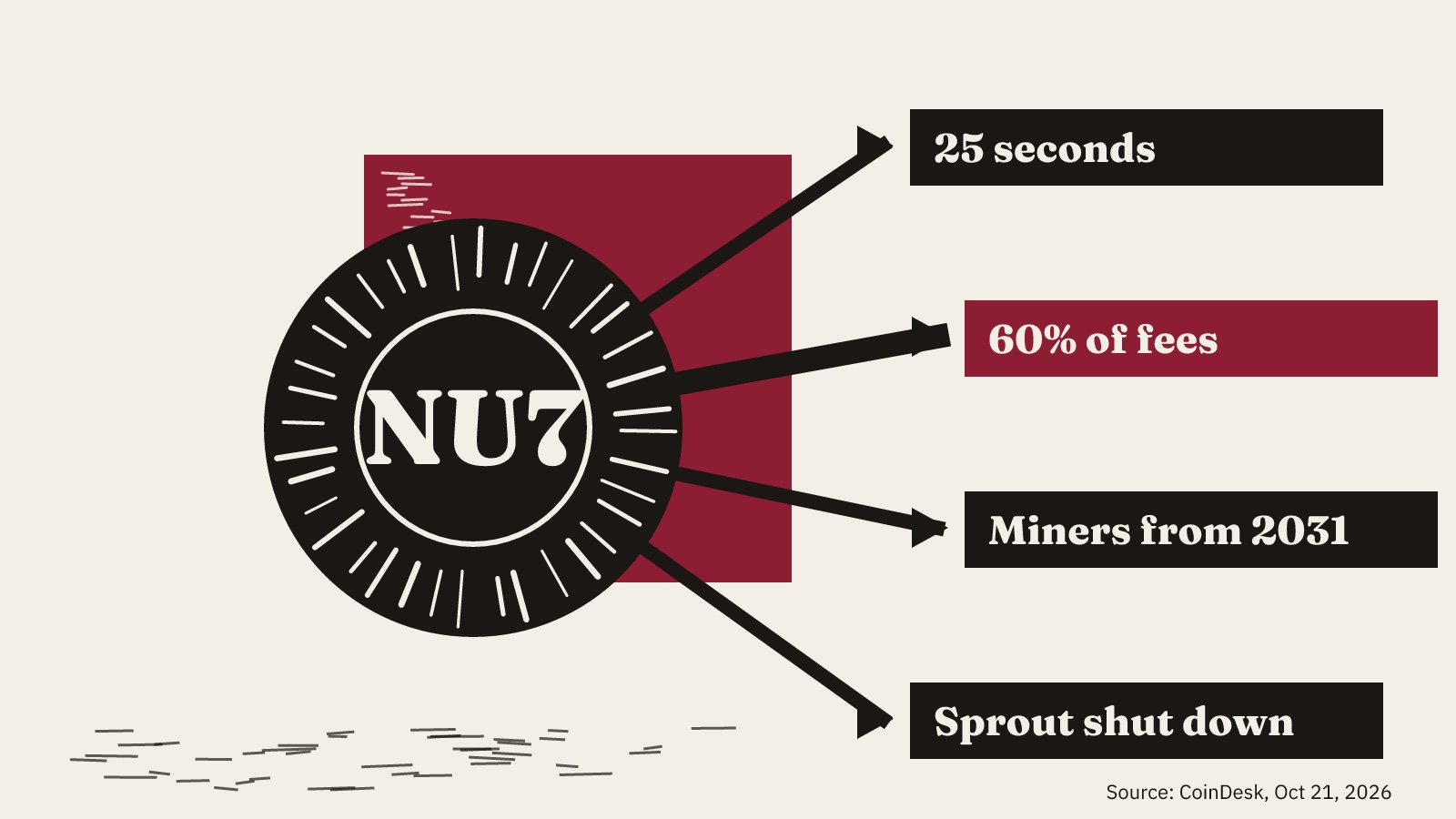
NU7 is a scheduled change to Zcash's consensus rules, the shared rules every node uses to decide which blocks are valid. On Tuesday, Sean Bowe, a Zcash developer, submitted a proposal that names block 3,543,405 as the activation point, CoinDesk reported. That height was agreed at a meeting of the ZIP editors. ZIP stands for Zcash Improvement Proposal, and the editors are the group that signs off on rule changes. At that block, the time between blocks drops from 75 seconds to 25 seconds, 60% of each block's fees stop going straight to miners, and the Sprout pool shuts down completely.
Under the hood: what moves at the activation block
Network upgrades on chains like Zcash are tied to a block height rather than a calendar date. A block height is simply the position of a block in the chain. Every node knows the same height at the same moment, so a height gives everyone an unambiguous switch point. The date, around Nov. 5, is only an estimate of when the chain will reach that block.
Once the chain passes block 3,543,405, nodes running the new software start enforcing the new rules. The main moving parts are these:
- Block timing: the target gap between blocks falls from 75 seconds to 25 seconds. CoinDesk describes the effect as payments becoming three times faster.
- Fee handling: 60% of every block's fee revenue is taken out of circulation instead of being paid to the miner at once.
- Delayed payout: those withheld coins are scheduled to flow back to miners from around February 2031. The existing schedule that cuts mining rewards by 50% stays as it is.
- Sprout: the original Zcash privacy system is switched off. Coins still held there at activation become unspendable.
The block time change matters most for anything that waits for confirmations. A confirmation is each new block added on top of the block that holds a transaction. More blocks on top make a reversal less likely. CoinDesk gave an example: an exchange that credits ZEC deposits after three confirmations could cut the wait from nearly four minutes to roughly a minute and a quarter. The number of confirmations stays the same; each one simply arrives sooner.
The fee rule changes the timing of miner income rather than removing it. Part of each block's fees is set aside now and returned later, starting around February 2031, according to CoinDesk.
Who is affected
Holders with coins in Sprout carry the most urgent risk. Any balance left there when NU7 activates can no longer be spent, so it has to be moved out before the early November switch. Anyone who used an old Zcash wallet years ago and never moved those funds should check where they sit.
Node operators and miners must run software that includes the new rules and the chosen activation height. A node that is not upgraded would keep following the old rules and could fall out of step with the rest of the network. That is the basic logic of a hard fork, where old and new software no longer agree on what a valid block is.
Exchanges and payment services may want to revisit how they count confirmations, since blocks will arrive more often. Miners also see a change in when they receive part of their fee income, while the reward reduction schedule is untouched. Ordinary users sending payments should mainly notice shorter waits.
Status and next steps
The activation height is close to final but not yet locked in everywhere. As of 08:00 UTC Wednesday, Bowe's proposal had two approvals, CoinDesk reported, but it had not been merged into the deployment specification. That specification still listed the mainnet height as undecided.
Elsewhere the date is already visible. The public upgrade dashboard of the Zakura node software lists block 3,543,405 as the planned mainnet activation point. The upgrade itself has run on the Zcash test network since early October.
One more step remains before anything changes on mainnet: node software must ship with the chosen block height built in. Until node releases carry that height, the upgrade cannot take effect. Readers tracking the switch can watch for the specification merge and for node releases that include the activation block.
Sources
- CoinDesk, 21 Oct 2026
AI wrote this summary from the primary documents and reports cited above. It went live automatically after checks that figures match those sources and nothing is copied; there was no human review. It explains a protocol or rule change and is not investment advice.