News analysis ·
Starknet's L1 vote: what a research poll decides
STRK stakers are voting on whether Starknet should study leaving Ethereum as a post-quantum Layer 1. What the poll decides, and what it leaves open.
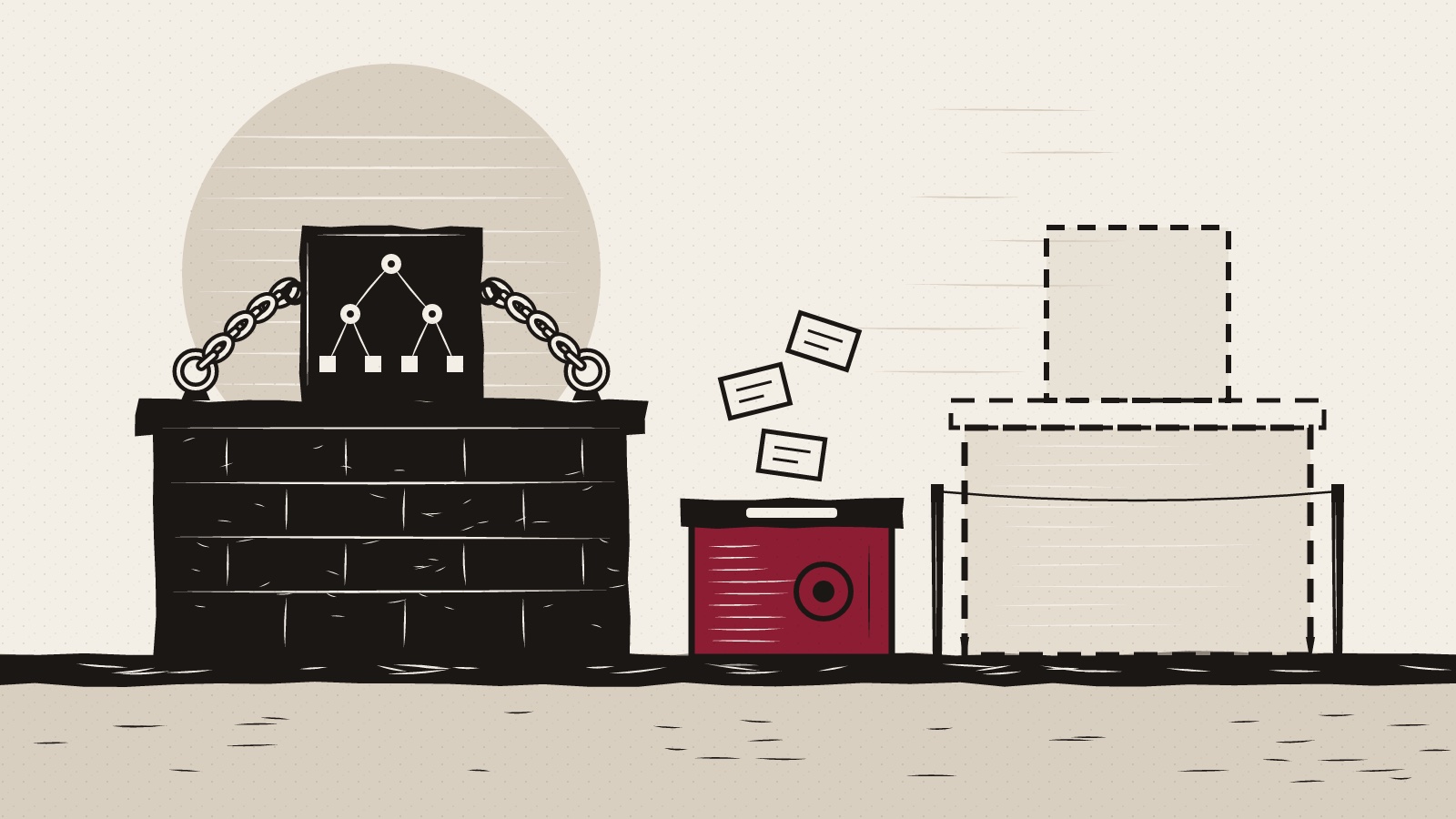
Starknet, the Ethereum Layer 2 built by StarkWare, has opened its first governance vote on whether to research becoming an independent, post-quantum Layer 1, Unchained reported. The ballot does not approve any switch. This article looks at what the poll actually decides, why a rollup would think about leaving its base chain for quantum security, and what would have to change under the hood.
The change in one paragraph
Nothing in the protocol changes yet. STRK stakers and delegators are being asked a narrow question on Snapshot, an off-chain voting tool: should Starknet spend effort studying a move to its own chain? The poll is non-binding. It opened on Oct. 15 at 09:32 UTC and closes at the same hour on Oct. 22. Voters can back research, oppose further research, or choose a neutral option that says they need more information. According to the proposal text described by Unchained, a research mandate is not approval of an L1 transition, and any real move would need its own, separate governance process.
Under the hood: why a Layer 2 inherits its base chain's clock
A Layer 2 such as Starknet runs its own execution, but leans on Ethereum for two critical jobs. Its bridge contract on Ethereum holds the assets users move in and out. Its data availability layer, the place where transaction data is published so anyone can rebuild the chain's state, also lives on Ethereum. That design is what lets a rollup borrow Ethereum's security instead of building its own.
The same design ties the rollup to Ethereum's upgrade timetable. Henri of the Starknet Foundation made this point in a forum post. He argued that components under Starknet's own control could reach quantum resistance soon, while the bridge and data availability layer move only as fast as Ethereum does. In other words, a chain is only as quantum-safe as its weakest dependency. Becoming a Layer 1 would remove that dependency, the foundation post said.
Starknet also starts from an unusual position. The post noted that it already uses STARK proofs, which are hash-based, and native account abstraction. Hash-based constructions are generally seen as more resilient to quantum attacks than the elliptic-curve signatures most chains rely on. Native account abstraction means every account is a smart contract, so the rules for checking a signature can in principle be swapped without changing how users hold their accounts.
- Stays under any outcome: STRK as the only token, with no new token issued.
- Stays under any outcome: bridges from Ethereum into Starknet remain open.
- Would change in a full Layer 1 move: Starknet would need its own settlement and its own data availability, rather than Ethereum's.
- Not set: any date for a switch. The foundation post said there is no timeline.
That third point is the real trade-off. Leaving Ethereum gives Starknet control over its post-quantum schedule, but it also means taking on the security work that Ethereum currently does for it. The research phase is where those costs would be spelled out.
Reading the vote itself
Snapshot data cited by Unchained showed 293 votes around 14:40 UTC on Oct. 15, with 99.9% of roughly 179.8 million voting power behind Yes. Two details matter when reading those numbers. First, Snapshot weighs votes by tokens, not by people, so a small number of large holders can carry most of the voting power. Second, the poll has no quorum requirement, so there is no minimum turnout for the result to count.
Neither point is a flaw for a signalling poll. They simply mean the result shows the direction of staked STRK, not a broad census of users or developers. The design keeps the stakes low: a Yes leads to more detailed proposals and more polls, not to code changes.
Who is affected
For now, STRK stakers and delegators are the ones asked to act. Users holding assets on Starknet see no change from this vote, and Unchained reported that the token and Ethereum bridges stay as they are under every outcome. Developers building on Starknet would feel a later Layer 1 decision most, since settlement and data availability would move from Ethereum to Starknet itself.
Eli Ben-Sasson, StarkWare co-founder and CEO, framed the poll as a consultation: "Becoming an L1 is a big deal. So is post-quantum security. We want to hear what the community thinks,"
Status and next steps
The idea moved quickly. Ben-Sasson first raised it on Oct. 8 around a Token2049 talk, putting the question of a separate chain built for post-quantum agility to the community. On the same day, the official Starknet account said a move was under consideration and named 2027 as the goal for full quantum resistance. Two days after that, StarkWare went further and described an independent L1 as its clearest path forward.
Results become visible as soon as voting ends on Oct. 22. A Yes starts research and further polls. A No means the quantum-resistance work carries on while the network keeps its rollup role. Choosing Neutral leaves the forum discussion open until the missing answers arrive. The main risk to watch is scope: any actual migration would be a far larger decision, with its own vote and its own security questions.
Sources
- Unchained, 15 Oct 2026
AI wrote this summary from the primary documents and reports cited above. It went live automatically after checks that figures match those sources and nothing is copied; there was no human review. It explains a protocol or rule change and is not investment advice.