News analysis ·
Solana validator security: the Linux kernel flaw
Anza told Solana validators to act on CVE-2026-98432 before Ubuntu shipped a fix. We explain the layer at risk and the stopgaps operators have.
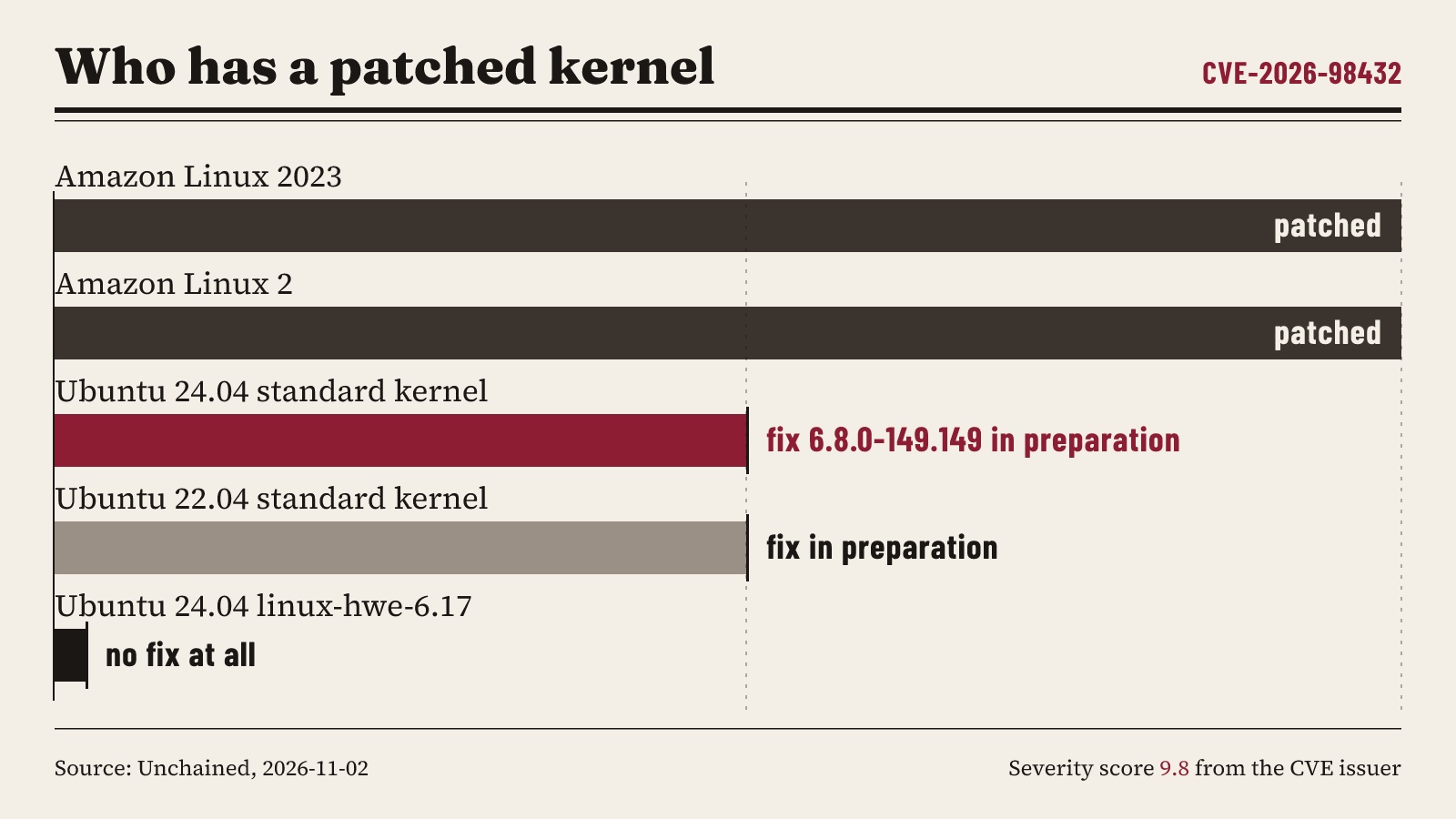
Anza, the team behind Solana's Agave validator client, sent an alert marked URGENT to mainnet validator operators on Sunday evening about CVE-2026-98432, a flaw in the Linux kernel rather than in Solana's own code, Unchained reported. The warning went out before Ubuntu, the system Anza builds and runs on, had a patch. This article looks at why an operating system bug reaches a blockchain, and what operators can and cannot do while they wait.
The change in one paragraph
Nothing in Solana's rules changed. What changed is the risk sitting underneath them. According to Unchained, the kernel bug may let an attacker with no login run code remotely on an affected server. The fix already exists upstream in the Linux kernel, but Ubuntu, the system Anza builds on, had not received it. Tim Garcia of the Solana Foundation summed up the gap: the flaw "is patched in the linux kernel but not yet patched on ubuntu". He also pointed Ubuntu operators to interim steps.
What is Solana, seen from a validator's server
Solana is a layer 1 blockchain: a base network where validators, the computers that check transactions and vote on blocks, agree on one shared history. Each validator runs client software such as Agave, which in turn runs on an ordinary operating system. A protocol can be well designed and still be only as safe as the machines that carry it.
That is why a kernel bug matters here. The kernel is the core of the operating system. It handles memory, processes and network traffic before any application sees them. If an attacker can run code at that level, the validator client above it offers no protection, because the attacker controls the machine it runs on.
Under the hood: how the attack path lines up
Three separate facts combine to make this a validator problem rather than a generic server problem. Reading them together is the useful part of this story.
- The trigger: according to AWS, the bug can be set off by specially shaped packets aimed at any internet-facing IPv4 TCP port.
- The exposure: Anza's requirements say every validator needs a public IPv4 address, so validators are by design reachable from the open internet.
- The feature involved: Anthropic's exploit, described in an Oct. 27 research post, targeted Linux machines listening on multipath TCP, a kernel feature that lets one connection use several network paths.
- The prize: that exploit let an attacker without credentials run commands as root, the most powerful account on the machine.
A validator cannot simply hide from the internet, because talking to other validators is its job. That is the design tension behind Anza's urgency. Anthropic said its proof of concept took 48 minutes to leak a kernel memory address and then needed five more minutes before shell commands were running, and that an unreleased research model found the bug.
The stopgaps and their limits
Vendors agree on one point: the real fix is a patched kernel. AWS has shipped fixed kernels for Amazon Linux 2023 and Amazon Linux 2 and said only a kernel update plus a reboot fully removes the risk. Until then, the interim options each carry a cost.
- Turning off multipath TCP: AWS listed it, but noted it leaves the flaw unresolved.
- Dropping IPv4 packets that carry IP options: AWS suggested this filtering rule as another interim step.
- Red Hat's packet filter: Red Hat gives the flaw its Critical rating and said the filter lowers exposure but cannot fully block the bug and may disrupt needed workloads.
For a validator, a filter that disrupts traffic is not a free choice. A machine that drops legitimate messages may fall behind the network. Operators have to weigh partial protection against the chance of degrading their own node. AWS said it was unaware of any real-world attacks.
Who is affected
The first group is validator operators running Ubuntu. On Monday afternoon Ubuntu's security tracker still listed the standard kernels of both 24.04 and 22.04 as exposed, with fixes in preparation and none shipped. A fix numbered 6.8.0-149.149 was being worked on for the standard 24.04 kernel, while some newer 24.04 kernel lines, linux-hwe-6.17 among them, had no fix at all. Ubuntu rates the bug high priority. The National Vulnerability Database entry carries a 9.8 severity score from the CVE issuer; NIST had not scored it yet.
Users and stakers are affected indirectly. They depend on validators staying online and honest, so a compromised machine is a risk to the network's operators first and to the people who delegate to them second. The timing adds weight: the alert came less than two weeks after Solana switched on Alpenglow, its new consensus engine, on mainnet.
Status and what to watch
The next step is Ubuntu shipping patched kernels, after which operators need to install them and reboot. AI is now part of how such flaws surface. In July the Ethereum Foundation reported that its own AI agents had caught a genuine bug in validator software, and macro strategist Jim Bianco said on a Bits + Bips episode that industrial scale AI is now combing through hand-written code for flaws. For protocols, the lesson is that security review cannot stop at the client software.
Sources
- Unchained, 2 Nov 2026
AI wrote this summary from the primary documents and reports cited above. It went live automatically after checks that figures match those sources and nothing is copied; there was no human review. It explains a protocol or rule change and is not investment advice.